Decode Supplement Facts Panel
Discover how to decode supplement facts panels with Moon Juice's comprehensive guide. Learn about serving sizes, daily values, and ingredient breakdowns…
Adapted from Moon Juice’s label guide archived on March 2, 2024. The illustrations show a historical label. Product formulas and labels can change.
Source
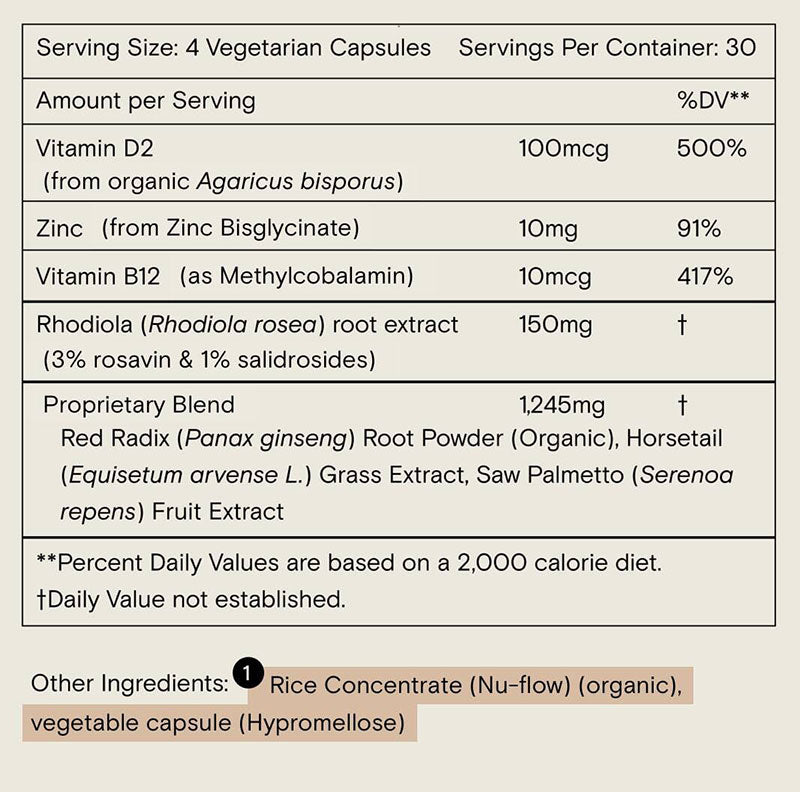
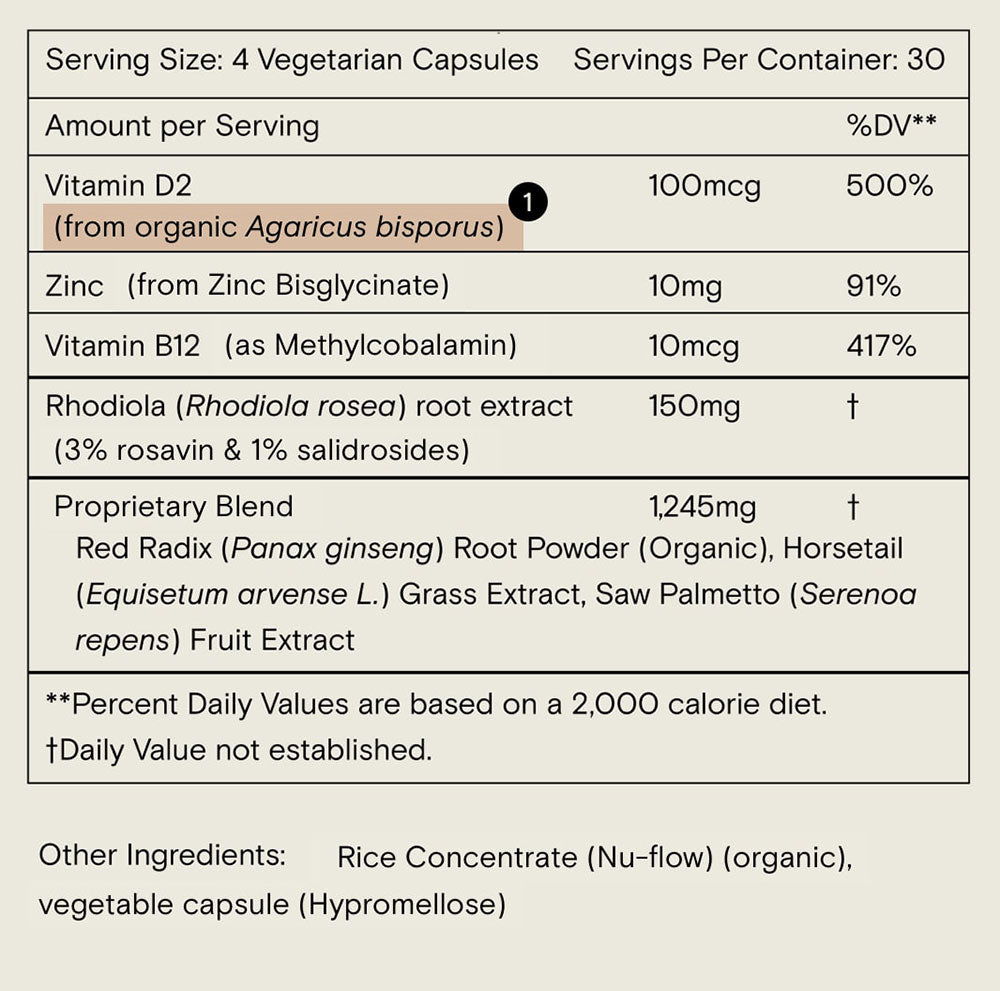
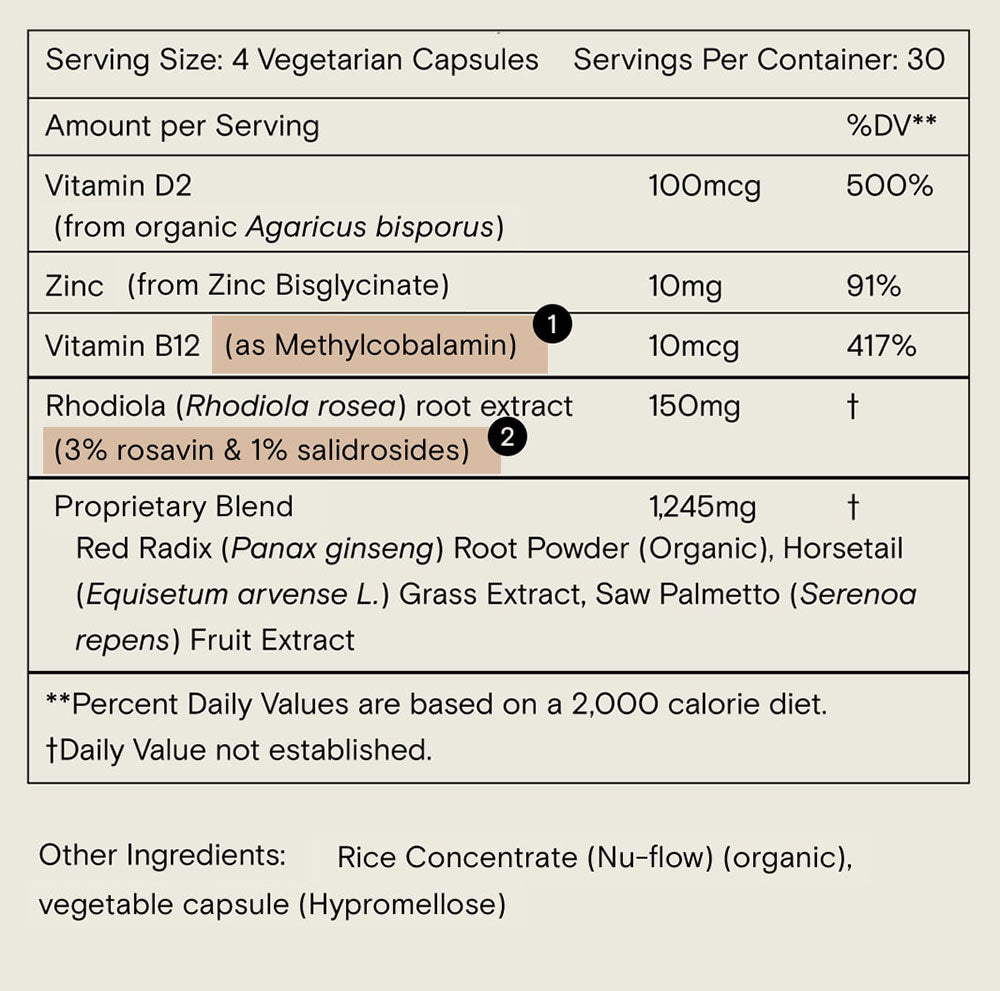
Start with the ingredient name and any source named beside it. In this example, the vitamin D2 entry names the mushroom species Agaricus bisporus.
Dose
Read the serving size before comparing amounts. The quantity printed beside an ingredient applies to the serving shown at the top of the panel.
A proprietary blend can give a combined weight for the blend. Ask the manufacturer for a breakdown if you need the amount of an individual ingredient.
Form
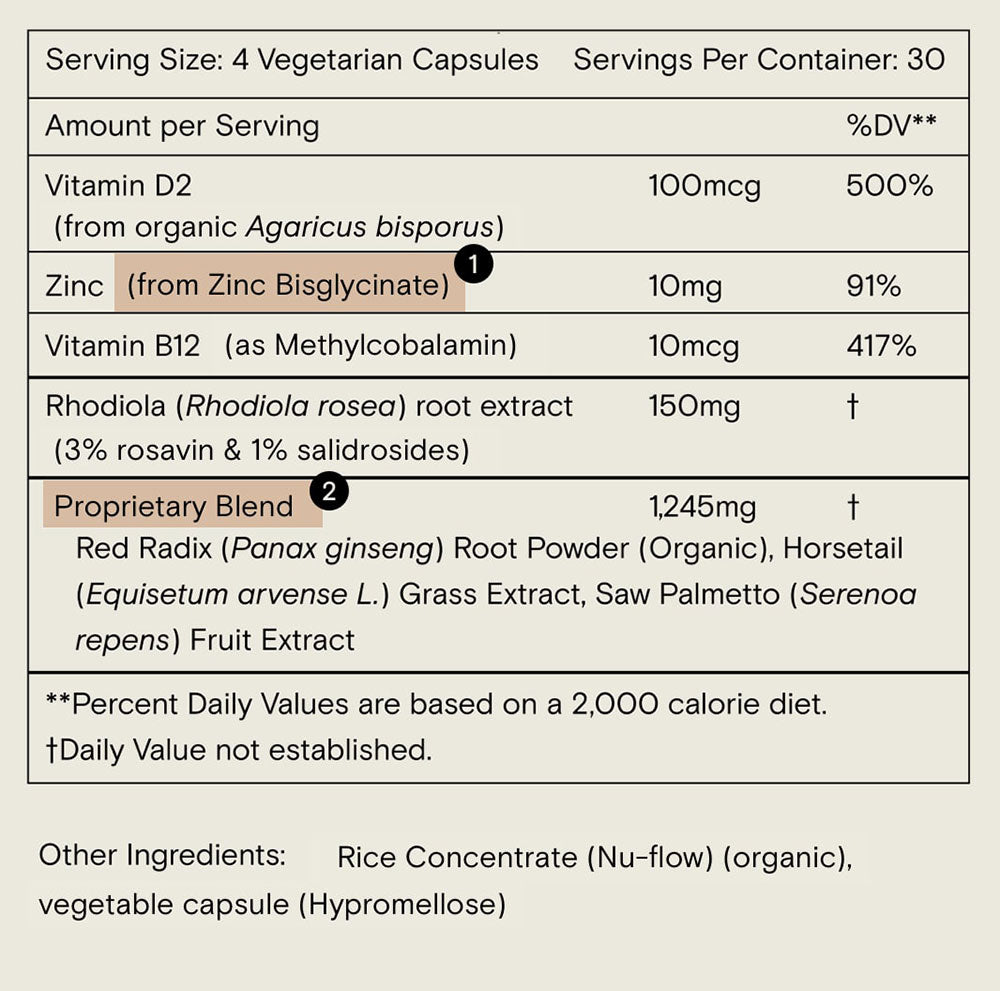
The label can name the form of a vitamin or mineral in parentheses. This example lists methylcobalamin for vitamin B12. A botanical extract can also name the compounds used to standardize it. The example lists rosavins and salidrosides for rhodiola.
Other ingredients
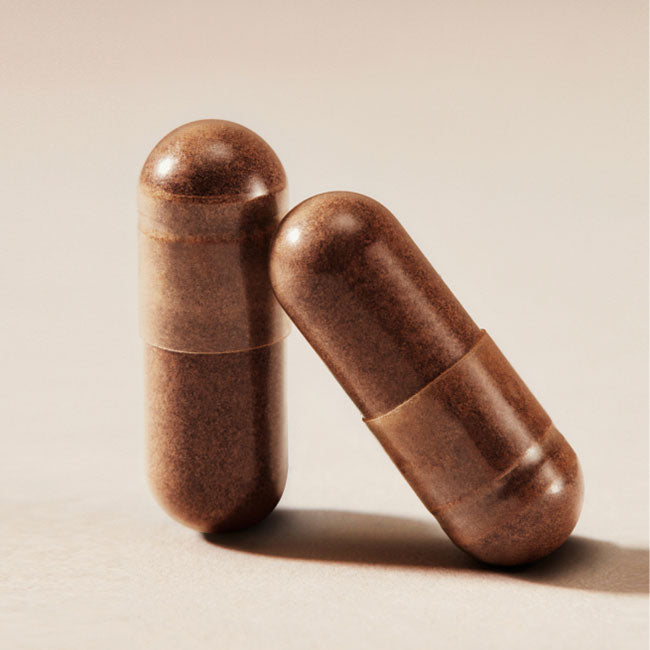
Check the separate list for capsule materials and other formulation ingredients. This historical example lists rice concentrate and hypromellose.